How can you effectively manage different working styles to enhance teamwork and productivity?
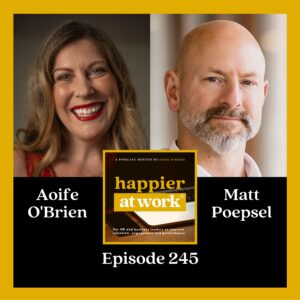
In the latest episode of the Happier at Work podcast, I had a thought-provoking discussion with Matt Poepsell, known as the “godfather of talent optimisation” at the Predictive Index. We delve into the intricate dynamics of workplace styles and the necessity of embracing differences to tackle complex challenges. Matt shares insights from his vast experience, exploring how addressing intrapersonal conflicts and understanding demographic shifts like the rise of AI and generational changes can elevate workplace satisfaction and efficiency.
Matt also stresses the crucial role leaders play in fostering an interconnected, purpose-driven culture. By aligning personal values with the broader mission, boosting wellness, and adopting a transformative business approach, you can drive engagement and happiness at work.
The main points include:
- Embracing complementary styles within organisations to handle complex projects effectively.
- Recognising and managing workplace friction, both internally and externally, to maintain organisational harmony.
- Understanding demographic shifts, such as talent shortages, and their impact on organisational dynamics.
- Overcoming fears and entrenched practices to prioritise stakeholder welfare and drive transformative change.
- The importance of aligning personal values with work to enhance job satisfaction and team dynamics.
- Focusing on beliefs over behaviors to enact personal and organisational growth.
This episode is a must-listen if you want to align your personal and professional aspirations with your organisation’s mission for a harmonious and productive work environment.
Do you have any feedback or thoughts on this discussion? If so, please connect with Aoife via the links below and let her know. Aoife would love to hear from you!
Connect with Matt
Matt’s Podcast: Lead the People
Connect with Happier at Work host Aoife O’Brien:
Previous Episodes:
Episode 120: The Journey to Self Mastery and Success with Sharath Jeevan
Episode 187: Get Ready for Happier at Work 2024 with Aoife O’Brien
Aoife O’Brien [00:00:02]:
Matt, you’re so welcome to the Happier at Work podcast. I know we’ve been talking about having this conversation for a while, and I’m so excited to dig in and have this conversation with you. Do you want to give listeners a little bit of a flavor of who you are and how you got into doing what you’re doing today?
Matt Poepsel [00:00:20]:
Sure, Yvette. It’s, my absolute pleasure to be with you. I see your smiling face. I’m so excited to be following up on our conversations as you pointed out. Yeah. My name is Matt Papsil, and I am the godfather of talent optimization, fun little title there, at the predictive index. So my job as a management consultant is basically to work with companies to figure out how they can align their people practices to really power their businesses. And, it’s really something I’ve enjoyed doing for a long time, probably because I was such a terrible manager when I first got started.
Matt Papsil [00:00:48]:
I had so much to learn. It was just a and a journey of really trial and error, and I’d like to make things a little bit easier for those people who are coming up behind us. But, yeah, if you’d be interested, I’ll tell you a little bit more about how I got to, got to this lofty position that I’m in today. Yeah. It’s, too.
Aoife O’Brien [00:01:04]:
Yeah. Yeah.
Matt Papsil [00:01:05]:
It it’s so funny because, my very first adult job was in the military. I was in the US Marine Corps, and I spent 6 years in the marines. And, it was amazing because it was such a high performance environment, one where we spent a lot of time talking about leadership, and I thought, man, being adult is pretty intense. So then I joined the corporate world and I said, let’s do more of that leadership stuff. And people are like, what are you talking about? Like, we don’t we don’t invest in that here. We don’t do that the same way here. And I thought, oh, that’s that’s a real disappointment. Interesting.
Matt Papsil [00:01:33]:
Yeah. And so it’s, it was unfortunate. So I had to continue on my own self study and just kinda figure out what, show myself the ropes when it came to business, how to lead people, how to connect with them, executive presence, like all the stuff. Right?
Aoife O’Brien [00:01:45]:
Yeah.
Matt Papsil [00:01:46]:
And I was so committed to it though that I decided to get my PhD in psychology and really study coaching and leadership at the highest levels and, really enjoyed learning about the theory and then applying it in my work as a software product executive and and these types of things, which was, pretty pretty fun for me to try to do that. And things were going along super well right up until the pandemic, and then the wheels came off. I got hit with this trifecta of, I turned 50, so I had that nice midlife situation that some of us get to. You mean you’re
Aoife O’Brien [00:02:17]:
getting older?
Matt Papsil [00:02:18]:
I know. I couldn’t believe it. Then there was the pandemic to contend with, so everybody’s values are being reprioritized. But at the same time, my father was diagnosed with kidney cancer.
Aoife O’Brien [00:02:28]:
Wow.
Matt Papsil [00:02:28]:
And he’s enjoying his retirement now. He’s made a full recovery, but at the time, I was like, what is happening? And it really threw me off of my foundation of work and my relationship with work, and it landed me safely on a meditation cushion of all places. And I got into, Buddhist meditation technique. Story. Right. It happens to a lot of us. And I had this swirl in my mind of Eastern philosophy and Western psychology all because I’m obsessed with work. It’s all I can think about.
Matt Papsil [00:02:58]:
And I came up with some happy collisions in my brain and ended up writing a book about enlightened leadership as I call it, which is really about how we can turn our organizations into place where people can really thrive and grow and contribute and make an impact. And, so today, the work I do is a big soup of helping companies through a combination of either assessment science or best practice or hopefully inspiration, education. I’m a bit of a teacher. I teach now at Boston College, which I’m very excited about. Lots of fun things. I pretty much try to just go where I’m needed.
Aoife O’Brien [00:03:31]:
Brilliant. I love that. And there’s there’s so much I want to unpack from what you’ve said there, Matt. And I think where I’d like to start is is the this realization. So joining corporate, and it’s like leadership. We don’t invest in that stuff here. Like, did they actually say that, or is that something that you realized over time that, hey, they’re not actually investing in this stuff? Or did they come out and actually explicitly say that?
Matt Papsil [00:03:56]:
Both. So what happened was it was, kind of a smaller software startup, so they didn’t have a ton of resources. This wasn’t a very large organization. They didn’t have a lot of formal, training programs. But at the same time, if I ask questions, even of my managers, it was pretty clear that they hadn’t gotten any training either.
Aoife O’Brien [00:04:12]:
Okay.
Matt Papsil [00:04:12]:
Right? It was one of those situations where they had been promoted because they were good at their jobs, but nobody really pulled them aside and said, here’s how to lead people.
Aoife O’Brien [00:04:19]:
Yeah.
Matt Papsil [00:04:20]:
And and so to me it was a different experience having gone from a place where from day 1, you’re taught about the importance of leadership and its principles in the military versus going to the civilian world. You could find people who have been in managing roles for 7, 8 years that really had never studied what it meant to lead people. They were just doing their best. Yeah. You know, and I which I appreciate and respect, but at the same time, we can do better than this. Come on. Right?
Aoife O’Brien [00:04:46]:
Absolutely. A 100% agree. And I was in the lucky position that I got leadership training before I ever needed it. So I was kind of, I I suppose, identified as someone who had high potential and was given all the training that I needed and ended up not being a leader in that organization where I was trained, but I was able to use that skills in subsequent roles then, which was amazing. Talk to me a little bit more about being a bad manager then or recognizing that in yourself or or at least having the the self awareness to go, hey. I I actually need some help
Matt Papsil [00:05:21]:
here. Yeah. I had a an experience where I would try to translate what had worked in the military to the civilian world, and that did not translate super well at all. Not everybody has the like mindedness of wanting to be as, intense, I would say, in terms of the mission. In many cases, they didn’t have the mission at all. Something I really took for granted was the fact that anybody who enlists in the in the military sort of kinda knows the deal when they sign on the line. Yeah. But when you work at a software company or in a bank or at a dry cleaner or anything in between, you kinda have to manufacture your own mission.
Matt Papsil [00:05:52]:
Like, why is it we why is the work what we do meaningful and significant? Why does working together toward a common goal, you know, why is this important? And, so I I think that I probably just assume that people felt the way that I did, and I think that that didn’t make me as effective a manager because I didn’t take the time to really engage people and show them their contribution, I would say. I was just like, well, of course, this is obvious. Right? And they’re like, no. Jackass is not obvious. Right? And so that was that was one example, and and then I think also I was so self conscious, Aoife, about my own capabilities, and I’m, what are people gonna think? Only come to realize that nobody’s thinking about me at all. You know, they’re all going through their own me issues. So it took me a long time to realize that the the paradox of leadership, I like to call it, which is that it’s not about you. Right? It’s about the mission and it’s about the welfare and the contribution of others toward that mission.
Matt Papsil [00:06:44]:
By the time you get to your own self interest, it should be pretty far down the list. So I had to kinda rebuild my brain, from bottom to top.
Aoife O’Brien [00:06:51]:
Yeah. No. I love that. Such it’s such a nice approach. Talk to me a little bit more about mission and the importance of that because, like you say, I think in the military, you can you can get it. You’re like you sign up for a reason. To me, I would also probably make that assumption that a company has a clear mission. Like, why are we here? Now maybe less obvious is making the connection at that individual or at that team level.
Aoife O’Brien [00:07:17]:
But maybe companies don’t spend enough time talking about, well, why do we exist? Why are we actually here? What problem are we trying to solve?
Matt Papsil [00:07:25]:
Yeah. I think the companies don’t, individual managers don’t, we as individual people don’t spend enough time thinking about, you could you could lump a couple terms in here. Right? So what do we say? Mission, significance, meaning, purpose, a lot of these things are are they’re not interchangeable, but they’re all related. And the the point I would make is that we have to recognize that as individuals, not all of us are wired to feel a tremendous tug when it comes to mission. However, I think that everyone does wanna be part of something bigger than themselves. I think that’s fundamental in the human condition as we realize our own sort of, finitude or our own limited nature in the cosmos. And so I think that to to some extent and maybe at different times in our careers, we’re gonna feel that. We wanna be a part of a winning team, we want that team to to to be meaningful.
Matt Papsil [00:08:14]:
But that doesn’t mean that if you work at that dry cleaner like I talked about that the mission itself doesn’t, you know, drip off the page the way it does for a non profit or a hospital or being a kindergarten teacher or whatever you might be into, then you kinda make your own meaning and purpose. And maybe you send your customers home a little bit happier or maybe you think about pressing a suit because somebody’s going for a job interview they really wanna ace. You know, you you gotta gotta manufacture on your own. And that’s where I think that executives can do it for the company and they should do all they can to really highlight those customer success stories, the the reason why. Understanding that we’re not all out there, you know, curing incurable diseases doesn’t mean that we shouldn’t try. Right? To understand the mission, the the value behind the products and services. For the manager, it’s important to do it for the individuals contribution to the company. So even if you work at accounts payable, well, you’re still making the organization’s mission possible.
Matt Papsil [00:09:08]:
Right? You’re making other people’s jobs easier. You’re, you know, contributing to the profitability of the firm. Whatever it is. Who cares? You have to be able to try to connect those dots. Otherwise, you can’t just assume that people really drive home happily saying, boy, I sure did take care of those invoices today, and I feel great about it. Yeah. Maybe that happens, but that’s too much of a big risk to take to to, just let it leave it to chance.
Aoife O’Brien [00:09:30]:
Yeah. I think that can be twofold. So as someone who kinda likes that routine type of work, like, I I could totally get behind okay. So I understand now my role within the organisation and how that links to the wider purpose of what the organisation is trying to achieve, but also fulfilling a personal career mission or career satisfaction, whatever it might be, by doing something that I’m really good at, that I can do quickly, that lights me up, that I’m able to actually perform really, really well or faster or just with happiness and enlightened. You know? So I think there’s there’s kind of a twofold approach there as well. I mean, the other thing that that sprung to mind is this idea of purpose. So I’ve heard people talking about the big p purpose versus the little p purpose. And the and we assume that we need to have this big p purpose in order to feel like we have significance or meaning or a real mission.
Aoife O’Brien [00:10:31]:
And it doesn’t have to be like that. It can be the impact that you have on on your colleagues. It can be much smaller, much smaller p than than what we perceive, you know, saving the whales or having a huge impact on the environment or having a huge impact through through a new company, through social media, whatever it might be. Any any thoughts on that idea of mission and and how to kind of bring more of it into what we do on an everyday basis?
Matt Papsil [00:11:01]:
Yeah. I think you’re exactly right. I think when it comes to purpose, we can’t judge the scope or the magnitude of anyone’s purpose. You know, some people build extremely large businesses and some have small businesses, some people are solopreneurs. We wouldn’t judge and say one person’s good and one person’s bad at their job, you know, because it’s all about fit. And something you said a little bit earlier, like, if you’re if we’re taking advantage of your strengths and you enjoy your day to day work and you know that fit is there, happiness is gonna follow. And, you know, hopefully, there’s a little bit of stretch for you and you’re learning some new things on the job, you know, that that’d be great as well. And so I think that from a purpose perspective, it really does come down to your values, your strengths, your your world view.
Aoife O’Brien [00:11:42]:
I think
Matt Papsil [00:11:43]:
a lot of times we don’t think about that enough. And and the fact is, let’s say that you believe that the world should be, mindful about details. It shouldn’t be sloppy work. Diligence is really important to you.
Aoife O’Brien [00:11:54]:
I’m busted now.
Matt Papsil [00:11:55]:
Yeah. Look at this. I love it. That’s perfect. Then the point is is that, you know, if that’s if that’s what you see as a world of an orderly world would be a better world in your view, then certainly doing work
Aoife O’Brien [00:12:05]:
I’m kidding.
Matt Papsil [00:12:06]:
Where you produce that outcome is gonna be purposeful for you. Yeah. And I think that that’s great. We need those people in organizations in very specific roles. But for someone else who’s like, I’m a creator. I’m sloppy. I mean, we can’t know the future. We have to experiment.
Matt Papsil [00:12:19]:
We have to fail. We have to be willing to try new things. That’s okay too. If that’s your purpose and that’s what gives you a sense of significance, then, you know, you wanna honor the muse. Okay. That’s great. How do we put you in a role where you get to do
Aoife O’Brien [00:12:32]:
that? Mhmm. And I think I think that is the really important part. You mentioned that word, fit. I love this concept of fit. Let’s not go down the road of cultural versus culture fit. For me, it’s it’s culture fit, and we can have that debate another day. But you use the term fit, and it is about needs. It it is about strengths.
Aoife O’Brien [00:12:53]:
I love this idea. It’s the worldview. It’s like how from what perspective are you actually looking at the world? And I love how you articulate it. Like, a a more orderly world is a better world for me, but it’s not necessarily how other people would perceive that. And I think it’s an appreciation of the differences that each of us have and the unique strengths that we bring to the workplace as well.
Matt Papsil [00:13:14]:
Yeah. And there’s a range there. Right? So let’s say that you and I are working together. You’re very detail minded, and I’m very creative minded. I have a scale of responses to your desire for an orderly world. I could tolerate it. Mhmm. Okay.
Matt Papsil [00:13:27]:
That’s kinda the minimum, pretty low bar there. I could I could acknowledge it and basically try to help you with whatever that means or I could even celebrate it. Like in our work together, I could call out the fact that I love how much you’re into an orderly world, and you work so hard to make sure that every file has the right name, so we can find them quickly when we need them, which reduces stress, which lets me go home and have a better time with my bride because I’m not all frustrated at work. That’s not my superpower but I love that that’s your superpower. Okay. That’s like celebrating it. How long did that take? Not long. How much did that cost? Nothing at all.
Matt Papsil [00:14:03]:
So when things are fast and free, we should do those things, in my opinion, if they make the work go better. So in this case of talking about purpose and recognizing like you said, we can respect one another’s world view and that we have differences in that, but we can also celebrate that because we need complimentary styles to handle complex work. Most organizations and even for most solopreneurs as you know, it’s going to be a combination of skills you need. Sometimes you need to innovate and be creative, sometimes you need to be rigorous and make sure you have detailed orientation. And and, so we’re gonna have, competing goals and competing needs and styles, but they’re only competition when we put them against one another. They can be complementary if we allow them, but they turn into competitive if all of a sudden we entrench ourselves in our egoic worldview of saying my way is the only way Yeah. Or the way that you do things actually impinges upon my worldview, and we can’t have a reasonable adult conversation about it and negotiate our differences. Instead, we’re gonna have to go to war, and we’re gonna have boundary wars about you didn’t fill out your TPS form the right way, so therefore, I’m not gonna get you your expense report on time.
Matt Papsil [00:15:11]:
Like, oh my gosh. This is what happens in bigger companies. Right?
Aoife O’Brien [00:15:14]:
Yeah.
Matt Papsil [00:15:14]:
There’s a lot of energy that goes into people supporting their own worldview at the expense of others and at the expense of harmony.
Aoife O’Brien [00:15:21]:
Matt, did you just make an Office Space joke?
Matt Papsil [00:15:23]:
I might have. I might have. I date myself with that.
Aoife O’Brien [00:15:27]:
For anyone who hasn’t seen Office Space, it’s a 1999 cult movie about offices, and the TPS report is, I don’t know. Would I a monthly, weekly report that has to be filled out. And when this guy, the protagonist, then it makes a mistake, he has to hear about it 7 times because he has 7 different bosses. If you haven’t seen it, check it out. The whole premise is that it’s, coming up to Y2K for I think most listeners, to the podcast are old enough to know what Y2K is. So, yeah, we’re coming up to Y2K, and they have to update all of the software. But definitely go and check it out if you haven’t. Like, it’s, for me, one of the best cult classic movies that that I’ve ever watched, so slight aside from this.
Aoife O’Brien [00:16:13]:
Matt, before we get on to kinda talking a little bit more about this idea of enlightened leadership, I’d love to know what what are the big challenges that you’re seeing at the moment with organizations? Like, are are there some specific trends? Are there some things that have changed in the last number of years? Are there some things that have accelerated? Like, what are the big challenges that are are being faced by organizations or leaders within those organizations?
Matt Papsil [00:16:38]:
Yeah. In in every, in a general sense, there will always be friction in our organizations. And sometimes it comes from within. Sometimes it comes from the outside. So we just have to recognize that in order to have a freely flowing harmonious life or business, we’re going to invite some level of friction. It just naturally happens in this in this world of ours. What’s creating friction is the way I’ve might frame this, what’s creating friction today with these trends in the in the macro enlightened? It’s amazing that we’re in, 2025 now and the I I do a lot of research now around 2030. I’m interested in what the workforce is gonna evolve into over the next 5 years.
Aoife O’Brien [00:17:17]:
Yeah.
Matt Papsil [00:17:17]:
Some of the trends are more demographic and technical, so some examples around talent shortages. Yeah. There’s actually a real significant, shortfall in the number of available workers to do work. Not every industry is affected equally and not every region, but generally speaking in the macro sense, it’s true. Mhmm. Another is when we think about obviously the rise of AI, which is very empowering and exciting, but also unsettling to people who are being displaced Yeah. By that. We’re saying that the, average, shelf life of certain skills is less than 3 years.
Matt Papsil [00:17:49]:
Wow. Unbelievable when you think about how fast we have to learn new things.
Aoife O’Brien [00:17:52]:
Yeah.
Matt Papsil [00:17:53]:
And what about demographic shifts? You know, boomers are staying in the marketplace a lot longer because, you know, we’re living longer and it’s expensive. So a lot of them are hanging in. And at the same time, you know, gen x like myself, much smaller generation, you know. And by the time you see gen z coming in, you’re seeing wildly different, values and expectations and preferences. So a lot of generational clash happening in organizations. There’s some examples but then, kind of in a more humanistic realm, there’s a massive interest in things like wellness at work or stakeholder capitalism. How do we use business as a force for good? So lots of trends that I I keep track of and trying to see how they affect our way forward to create enlightened enterprise, but also how they affect us individually and our work experience on the job which tells us our role as enlightened leaders, how we can go ahead and and make sure that we’re meeting the needs of the mission, we’re meeting the needs of others, and we’re doing so in a way that’s aligned with who we authentically are as as individuals.
Aoife O’Brien [00:18:52]:
Yeah. I love that that that kind of threefold approach, and maybe we’ll come back to that in a second. But I love to dig into this idea of the talent shortage. Like, it’s something that has come up, and I’m genuinely trying to wrap my head around it because is it that there are not enough workers, that we don’t have the skills, that those skills take a long time to learn? You know, for me, I’m like, okay. So can you not train people how to do what it is that you need them to do? Like, what Yeah. What is the actual issue here?
Matt Papsil [00:19:19]:
Yeah. It’s it’s complex in the sense that there’s multiple factors. One is that the nature of the demographics, people are having fewer kids, so we have smaller generations now. And when you think about the, generations that are still hanging out in the workforce, there’s still a lot of demand. So for example, with an aging population where the average age is going up and up and up, then in the health care system, for example, we need a lot of people to be able to provide all the health care services. Well, there’s just not that many people in these generations anymore.
Aoife O’Brien [00:19:46]:
Yeah.
Matt Papsil [00:19:46]:
You know, when you think about Gen z and Gen Alpha, they’re smaller than the boomer generation by a long shot. So Okay. Some of it’s just available demographics. Another comes down to though people who elect to drop out of the traditional workforce. Gig work is exploding. So when you think about in in the US, for example, driving for DoorDash or Amazon or Instacart, these types of things are are attractive to workers who wanna set their own hours and make a decent wage because those companies are making a lot of money and, consumers want a lot of those services. Right? That’s the the the nature of of consumerism has changed. Well, I talk to healthcare CEOs and say, what young person wants to come work in a hospital for minimum wage to work with sick people when they could drive for DoorDash? But how are we supposed to afford and compete to get people to come work for us? So we’ve had to shut down services because we can’t get the the the bodies to staff at the levels that we need to.
Matt Papsil [00:20:37]:
You’re like, what is happening? Right? So that that’s another another example. And then as you pointed out too
Aoife O’Brien [00:20:43]:
Like as the Yeah. Yeah. As you said, aging population and when you need those services as you age, that there’s literally not enough people to provide those services.
Matt Papsil [00:20:53]:
Well, and legislation is coming in to say you have to have a certain number of services, for example, in assisted living and and elder care facilities. And they’re like, how? How do we do that and still maintain our operating models? So this is the clash that you see. Right? When all of a sudden we we have these challenges. And, I’ll give you one example. I went to have some blood drawn and my phlebotomist said, I gotta tell you, I love, you know, taking people’s blood, but the reality is my boss is a jerk, the company doesn’t care, and I can make just as much money driving for DoorDash the way that my my husband does, so I’m thinking about quitting. Woah. How much of that can we fix and do we need to fix if we wanna retain access to talent? Right? She said she loves her job, but hates the environment in which she’s doing it. Mhmm.
Matt Papsil [00:21:37]:
That’s on that that’s on that healthcare system. Right? Yeah. They’re not doing the things that are fast and free if the boss is acting like a jerk and culture isn’t, you know, meeting that that part of her needs. She’s not saying I don’t wanna do my job anymore. She’s saying it’s just not worth it.
Aoife O’Brien [00:21:51]:
Yeah. Exactly. And and to me, it’s not just about the money. Like, if you could get paid more to do that other thing, but you don’t enjoy it as much, then would you actually be willing to make that move? Or if, like you say, they could fix whatever’s going on in that health care service provider, you know, teach the manager how not to be a jerk, how to actually manage people properly, how to do those, what’s the phrase that you use, Matt? The fast fast and free
Matt Papsil [00:22:17]:
Fast and free. Yeah.
Aoife O’Brien [00:22:18]:
Fast and free, like, feedback. You’re doing a great job. Here’s what I where I see your potential. All of this kind of stuff.
Matt Papsil [00:22:26]:
You have a detailed world view, and we would really need that around here. Thank you so much for bringing that superpower. Yes.
Aoife O’Brien [00:22:32]:
Exactly. Yeah. Yeah.
Matt Papsil [00:22:33]:
And what are the
Aoife O’Brien [00:22:34]:
difference that can make for her and for the organization?
Matt Papsil [00:22:37]:
Yeah. And and you mentioned the the point about, competitive pay, for example. We’re seeing evidence that in certain socially oriented and impact oriented companies through stakeholder capitalism, for example, they’re seeing a 25 to 30% less than competitive market pay. People will take less money if they believe and feel good about the work they’re doing Yeah. And the work that you’re doing as a company. So it’s kind of bogus to say, you know, we can’t afford it or this yeah. If you’re a a heartless, you know, gutless company and you have no real impact and you’re in it for yourself, yeah, expect to pay more for people to come in and wanna be a part of that, contribute to that. So I I think there’s just a it’s a shift in the level of consciousness we need to bring to how all of this stuff works together.
Matt Papsil [00:23:18]:
And I would hope that any executive and any manager would say, yes, we should do the fast and free things if it makes our customer service better, our employee experience better, our financial performance better. And anybody who says, no, I’m not willing to do those things, well, then they shouldn’t be a manager, period.
Aoife O’Brien [00:23:35]:
I’d love to reflect back to you and kind of say the opposite of all of those things. And you alluded to it just before you talked about it. And it’s this idea of paying more to attract talent when you have that not so favorable environment. And we could I don’t know. We could call it the jerk tax. You’re gonna have to pay people more to stay in that environment because they’re not getting treated very well or they’re not, you know, they’re they’re not having that positive experience that work should be.
Matt Papsil [00:24:03]:
Yeah. Yeah. 100%. And and you might consider it a transactional tax. If it’s only gonna be transactional, you’re gonna pay me to do a job, I’m gonna do the job, but I’m gonna have to go get my meeting somewhere else, then you’re gonna have to pay me a little bit more for that.
Aoife O’Brien [00:24:15]:
It’s the what is it? The the hands versus the heart. So you’re paying me to use my hands to do the work, but you’re not paying me to engage and to really care about the work that I’m doing.
Matt Papsil [00:24:26]:
But what if you came to work and I said, I’m, not only is the work you’re gonna do meaningful, but we recognize you have things you wanna accomplish in your career and new skills to develop. And we’re gonna invest in your professional development as you learn on our projects because we’re gonna benefit from that too and that way you can grow into the type of career that you’d like to have. That’s a transformation situation versus a transactional situation. You’d be like, I might actually be willing to take less because you’re giving me so much value in another form. I’m getting psychic income, I’m getting professional development, and I get to feel good, and my friends are gonna love hearing about all the great stuff I’m doing to save the planet or what whatever the heck.
Aoife O’Brien [00:25:02]:
Yeah. Yeah.
Matt Papsil [00:25:02]:
All of a sudden you’re like, okay. So then, you know, that’s how all of the thing we have to understand that value is not simply economic value, but they’re related. Right? So now all of a sudden if we create value because we’re gonna help people grow, experience well-being, we’ve got unlimited paid time off, Don’t expect us to pay higher than market if we have so much value we’re giving you in other ways. And you might say, well, how will we find enough people to fill these jobs? You don’t need all the people, you only have so many jobs. You need the right people back to fit. You need culture minded, mission oriented, what’s the opposite of a jerk tax? Benevolent benevolent coworker tax. Yeah. These types of people are the ones you need.
Matt Papsil [00:25:43]:
So when you’re more clear about what you’re all about, you’re transparent about it, and you’re selective about it, don’t be surprised when companies that are really desirable to work for, they have a 100 people applying to jobs. Mhmm. Right? And where the transactional companies that are just another company are struggling to find people who wanna come work for them. And, you know, that’s that’s exactly what’s happening out there because everything has changed, Aoife, except for the way we think about our businesses and the way that we manage our people. If that’s not gonna change, then don’t expect to stay competitive for long.
Aoife O’Brien [00:26:14]:
Mhmm. But you need to change with the times as well. Love that.
Matt Papsil [00:26:17]:
A 100%. You have to do business the way business is being done. And what people are saying now, especially young people, post pandemic people, we don’t have all of this access to AI. We haven’t spent all this time studying business just to have another job. Like, where else in our lives do we accept the same old thing from 10 years ago? I can order a pizza now and watch the blue dot make its way across town to my house. Like, everything has changed, except the way we approach work, where we spend all of our time as adults, that’s ridiculous.
Aoife O’Brien [00:26:47]:
Yeah.
Matt Papsil [00:26:48]:
Or to say, well, we can’t really make a profit and, you know, do well by our people. No. Ridiculous. Outdated. Right? All these things are outdated. So when I talk about an enlightened mindset, it’s really opening up to these new ideas, these, casting off the way things have always been done, moving away from our self interest. That’s all it takes. And I know it’s it’s all it takes.
Matt Papsil [00:27:10]:
Like, it’s easy. It’s not it’s it’s simple but not easy. I acknowledge that. But I think it’s it’s just so important. I don’t wanna see phlebotomists leaving their job, or companies paying a jerk tax and not being able to pay a bonus to their company just because they didn’t take the time to figure out how all these dots are connected. Right? I don’t want us to go home to our families, less capacity than we could have had otherwise because we had a bad day at work because of doggone TPS reports. Like we gotta fix this. It always comes back to the TPS reports.
Aoife O’Brien [00:27:38]:
What’s holding people back? So Fear.
Matt Papsil [00:27:40]:
Fear, Aoife.
Aoife O’Brien [00:27:41]:
What’s the big difference between companies that are doing this and they’re doing it really well and the ones that haven’t even taken it into consideration?
Matt Papsil [00:27:48]:
Well, I think companies that do it really well not only have had that sort of realization that we can do things a different way, but they’re willing to try. You know, and there’s so many examples, countless examples. Think about Patagonia. Right? So apparel company, owner says, oh, my company’s worth 6,000,000,000 plus dollars, you know what I’m gonna do? I’m gonna bequeath it to the planet so that when I’m gone, I’m not passing it down to my family, the planet gets to benefit from that. You know, like, okay, that’s a that is an extreme example of someone who is living their values, right? So let’s go something a little bit smaller. In the US, we have company Bombas and they say, you buy a pair of our socks, we’ve specially designed new socks for the homeless and we’ll donate a pair to the homeless. Okay, great. So now all of a sudden you’re like was that that hard? Like and that’s not even a new concept.
Matt Papsil [00:28:32]:
TOMS Shoes did that a long time ago, buy 1, buy a pair, donate a pair. Okay. So you’re in a business that you’re in a software company, you can’t donate a pair. Okay. What can you do? I think this is the willingness to ask the question of what’s possible. That’s one of the first things that mindset shift of what’s possible in terms of making sure all of our stakeholder needs are being met is absolutely where it begins. Now as soon as you start to try to do it, you’re gonna run up against friction no matter what because people have fear, we have, practices that are habitual in our companies, this is the way we’ve always done it here, We don’t have management infrastructure for some of this stuff. I get it.
Matt Papsil [00:29:08]:
I get it. So then you have to have that commitment, that fire in your belly to say we’re going to fight through this friction to get to that place where we get to be one of those, enlightened sort of desirable types of companies and to recognize and and go in front of your board if you’re an executive and say we need to do this. Right? It’s not easy, takes a lot of courage to go to the board and say we’re we’re gonna take a little bit less profit while we figure this out. Like that’s we should be playing a lot of respect to our company’s leaders who are doing these things. Right? Because it’s not easy to go and and try to make these types of changes but it’s important, Doug, on it. It’s important you’re talking about people’s welfare, You’re talking about the financial performance of the future of your firm. Like, there’s so many reasons to do it. We gotta get past that friction.
Aoife O’Brien [00:29:54]:
Mhmm. Yeah. Yeah. And if we bring this back down to the individual level and say, okay, this is gonna be really hard and it’s scary, What are some of the things that maybe get in the way at that individual level? But then what are some of the benefits that that come? Like, what’s what’s in it for me, I suppose, is what I’m trying to say.
Matt Papsil [00:30:12]:
Yeah. I think that you get a lot more alignment with the things that really light you up genuinely. So So when you understand and you’re clear about your values and your purpose and these sorts of things and you commit to living in line with them, everything gets easier. Everything gets easier.
Aoife O’Brien [00:30:27]:
Yeah.
Matt Papsil [00:30:27]:
Doesn’t mean everything’s easy, but everything gets easier.
Aoife O’Brien [00:30:30]:
Yeah.
Matt Papsil [00:30:30]:
Because what’s not easy is when you do work that you hate and you compromise and hold back some part of yourself and you try to convince yourself that it’s okay and you go home and you’re so tired exhausted that you can’t even bother looking for a new job so you just binge Netflix or whatever, like, that’s not an easy life. It looks easy on paper, it’s not easy, it doesn’t feel easy inside your brain. Instead, when you say, you know what? I’m all about detail orientation and that’s the world that I see is a world that’s orderly and right now quality on my team isn’t as high as it could be. And so I’d like to bring more of my natural superpower and I’m gonna make us 1% more quality minded. I’m gonna celebrate. I’m gonna create a new award on my team. There’s no money. It’s just bragging rights, but I’m gonna recognize the quality producer on our team once a month, and then we’re gonna make a big deal about it at our team lunch or whatever.
Matt Papsil [00:31:23]:
Fast and free. What is fast and free? That basically takes your worldview and actually puts that ripple out into the waters of the universe to say an orderly world is a great world. And all of a sudden, you’re gonna drive home and you’re gonna be thinking, did you see how much Sally was smiling when I gave her that quality team member award at lunch and she was just was really so, like, I recognized, I don’t think I have to worry about Sally leaving because she saw how much we appreciate her.
Aoife O’Brien [00:31:47]:
Right? Yeah.
Matt Papsil [00:31:48]:
These things are possible, Aoife. They’re possible, but we have to want to do them. We have to have awareness. It all starts with awareness, And we have to have the insight that how these things actually matter and why. Yeah. And then we actually have to follow through.
Aoife O’Brien [00:32:01]:
Mhmm.
Matt Papsil [00:32:01]:
We have to take that action to actually do the things. Yeah. And don’t be surprised when you’re a manager and you’re like, your team has really been, you know, firing all cylinders. They’re actually showing up in my team’s meetings and they’re they’re like super happy with what you’re doing. Keep it up. Right? You get noticed, you get promoted, all these kinds of things. Then the other team managers are like, I gotta step up my game. I gotta keep up with Aoife.
Matt Papsil [00:32:20]:
She’s making her team, like, all all excited and motivated to work here, like, what and then they’re gonna come to you for tips, like, this is how we start to make change, you have to be the change, right, and then all of a sudden it becomes contagious. Yeah. So don’t wait for the CEO to go to the board and say, we’re gonna take less profit to turn this whole thing around. That’s not an excuse. You can’t say, well, what am I supposed to do? You’re supposed to do whatever you can do. Find your little p until the big p catches up. Like Exactly. Let’s let’s get to work.
Aoife O’Brien [00:32:44]:
Yeah. Yeah. Yeah. Like to me, it’s it is that. It’s taken it back to the individual level. It’s that taking personal responsibility for how you show up at work and the environment that you create. And if you find yourself that you’re exhausted at the end of the day and you’re pinching Netflix, as you said, you know, what can you do? What what changes can you make to actually do something about that? And and do you want to actually change? Do you want to create something that’s more meaningful and that’s that’s better for you? Matt, before we wrap things up, is there anything else that you wanted to share from an enlightenment perspective leaders, from organizations? And, like, to me, the idea of, you know, thinking about what’s possible or asking the question what’s possible and not using excuses to get in the way to say that would never work here or that won’t, you know are there some organizations who maybe think, oh, that that definitely won’t work here or leaders who think that won’t work in our organization?
Matt Papsil [00:33:43]:
Yeah. I I think that the one thing for me is that these are all just stories. Right? We put so much meaning into the stories we tell ourselves.
Aoife O’Brien [00:33:51]:
Mhmm.
Matt Papsil [00:33:52]:
And what I find is that I’m I’m I’ve been delighted because I’ve been studying beliefs, and beliefs are so powerful because they really drive the thoughts and emotions that we have, which ultimately drives our behaviors. So we spend way too much time trying to fix our behaviors when we spend too little time mining our beliefs and really turning up the volume on the beliefs we want most. The reason I say that is because when we think about biases that we have, oh, that won’t work here, oh, we tried that, oh, you know, that might work for Bombas but that’s not gonna work for us. It’s just a story, it’s just a story. But how do we move from bias to benevolence and start to say, what if it did work? What could it look like? What could our version of that look like? What if we were to try it? Like all of a sudden, by reframing those beliefs, we will naturally change the thoughts and the emotions which will naturally change the behaviors and don’t be surprised when a month from now, 6 months from now, a year from now, you do the fast and free things automatically at that point, and all of a sudden you’re in a very different place. And then you get a little greedy for it, and you’re like, how can we have an even bigger impact? How can we, you know, impact our communities 10 times as much as we just did last quarter? Like, whatever it is. Like, it becomes possible. Yeah.
Matt Papsil [00:35:03]:
Because it all comes down to the stories we tell ourselves. So if you’re gonna it all comes down to stories anyway. Why not start telling yourself better stories? Reframe those beliefs.
Aoife O’Brien [00:35:11]:
Love that. But to me, I’m also thinking of the impact that that has globally. It’s the impact that that has on the world at large if those ripple effects happen within organizations and think of the impact that you have on your colleagues.
Matt Papsil [00:35:23]:
A 100%. And I think that, you know, I will, I don’t talk about it a ton, but I absolutely believe philosophically about the interconnectedness for sure. Mhmm. And when you think about things like the butterfly effect, butterfly flaps and swings, half across the world Those
Aoife O’Brien [00:35:38]:
are great movie suggestions.
Matt Papsil [00:35:40]:
Oh my gosh. Like, all these things. I I think it’s true that we’re more connected than we could ever possibly realize. What that means is that this is incredibly good news. Because on the one hand, while you have to guard yourself because we’re so connected, we’ve seen that unfortunately, the the downsides of it. But what about the good sides? Let’s reframe our beliefs and tell ourselves stories again. That means that if I make one hyper local positive contribution on my team and I recognize Sally for quality because that’s my world view, What ripple have I just put out into the world of work? Right? Now all of a sudden, what if every manager in America and in the world did this, for example, just for one day? Like, it would fundamentally change the system. Right? So the point is that you can’t fundamentally change the system or or can you? Because all you can do is make your localized ripples.
Matt Papsil [00:36:24]:
This is the other side of the paradox of the leadership coin is where I said leadership isn’t about you. When it comes to action, you can only control you. You can only take action yourself. You can’t make anybody else do anything. You can only create conditions for them to choose to do things themselves. So the leadership paradox is while it’s not about you, you’re the only one who can do anything about it. So start, you know, making these sorts of changes, these low hyper local little ripples. And don’t be surprised when everything that comes back to you are these great crashing waves of of benefit and of positive impact.
Matt Papsil [00:36:58]:
It’s absolutely possible, Aoife.
Aoife O’Brien [00:36:59]:
Brilliant. Love that. Matt, the question we ask everyone who comes on the podcast, what does being happier at work mean to you?
Matt Papsil [00:37:06]:
I think you have to really make all 3 of these engines fire. 1 is around performance. You’ve gotta be able to do your best work, whatever that job is that you’re doing. So that’s number 1. The second is around the people. You have to be able to have this positive impact on the people around you. You have to be able to enjoy their company. You have to be able to be contributing and helping them to have the highest possible levels of of well-being and growth that you can.
Matt Papsil [00:37:31]:
And the last one’s that purpose that we talked about. If you feel that there’s meaning personally but also significance to the in the external sense to the work that you’re doing, in my book ideally even serving something bigger than than ourselves and something bordering on the spiritual benefit of just doing good work in the world, then I think those three things of of performance and people and purpose, I think if you were checking those three boxes, I think happiness is gonna flow pretty naturally for you.
Aoife O’Brien [00:37:58]:
Brilliant. Love that. And if people want to find out more about you, if they want to reach out to connect, what’s the best way they can do that?
Matt Papsil [00:38:05]:
Yeah. LinkedIn, I’m I’m, fabulously active on LinkedIn, so that’s definitely a good one. And then my own podcast, Lead the People, love to have guests like yourself on the show and just really, really just try to do everything we can to try to highlight this more enlightened approach to leadership and and, our world of work.
Aoife O’Brien [00:38:23]:
Love that. Thank you so much for your time today. I so enjoyed this conversation. We could probably talk about all these different things for for a few more hours, but let’s wrap it up there in the interest of of, Brevity. And if people want to learn more, they can reach out directly to yourself then. Thank you so
Matt Papsil [00:38:39]:
much for your time, Matt. Thanks for all that you do. Putting out all this great information. Really appreciate you.