Are you ready to upskill for success in the age of AI?
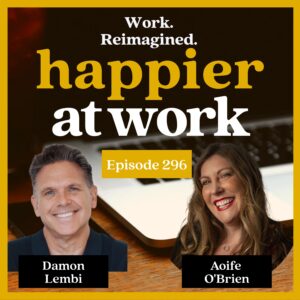
In this episode of the Happier at Work podcast, host Aoife O’Brien sits down with Damon Lembi, CEO of Learn It and author of “The Learn It All Leader,” to explore the evolving landscape of workplace learning. Together, they delve into the challenges and opportunities of transitioning from individual contributor to manager, and how both leaders and employees can harness the power of AI to augment their daily tasks and accelerate development. Damon shares practical insights about fostering a learning culture, overcoming fear of AI, and transforming learning from a “nice to have” into an essential part of organisational growth.
In This Episode, You’ll Discover:
- The distinct set of skills required to step into a management role.
- The importance of integrating learning into work hours.
- Practical examples, including sharing AI success stories within teams, leveraging AI for analysing transcripts, and improving sales and interview processes.
- The mindset shift from “know-it-all” to “learn-it-all”, and its value for ongoing growth, adaptability, and happiness at work.
Related Topics Covered:
Feedback at Work, Becoming a Leader, Personal Responsibility at Work
Connect with Aoife O’Brien | Host of Happier at Work®:
Connect with Damon Lembi | CEO of Learn It and author of “The Learn It All Leader,”:
Related Episodes You’ll Love:
Episode 285: Fixed vs Growth mindset at Work
About Happier at Work®
Happier at Work® is the podcast for business leaders who want to create meaningful, human-centric workplaces. Hosted by Aoife O’Brien, the show explores leadership, career clarity, imposter syndrome, workplace culture, and employee engagement — helping you and your team thrive.
If you enjoy podcasts like WorkLife with Adam Grant, The Happiness Lab, or Squiggly Careers, you’ll love Happier at Work®.
Join Aoife O’Brien for weekly insights on leadership, workplace culture, career clarity, imposter syndrome, and creating work that works for you.
Editing by Amanda Fitzgerald.
Website: https://happieratwork.ie LinkedIn: https://www.linkedin.com/in/aoifemobrien/ YouTube: https://www.youtube.com/@HappierAtWorkHQ
Mentioned in this episode:
Thriving Talent book
Aoife O’Brien [00:00:01]:
In a world of AI, how important is it to learn? If we have all of this information at our fingertips, do we really need to learn more things? Answering this question, as well as how do we learn in the age of AI, is my guest, Damon Lembi. This is the Happier at Work podcast. I’m your host, Aoife O’Brien, and we answer that question plus a whole lot more in today’s episode. I’m so glad you tuned in today. I would love to know what’s one thing you’re gonna do differently after listening to today’s episode. If you enjoy today’s episode, don’t forget to share it with a friend or a colleague who you think might benefit from it. And don’t forget to leave a rating or a review on your favorite platform. Damon, you’re so welcome to the Happier at Work podcast.
Aoife O’Brien [00:00:47]:
I know we’ve had a couple of conversations in the past, including me being on your podcast as well. So, uh, do you wanna let listeners know a little bit about you, your background, and what you do today?
Damon Lembi [00:00:58]:
Aoife, it’s an honor to be here. Thanks for having me. Uh, I’m Damon Lembi. I live out here in the San Francisco Bay Area. For the last 30 years, I’ve been running a company called Learn It, which is a live learning company, and our customers turn to us— all B2B— when they’re promoting people from individual contributors to new managers. And it’s a completely just different skill set, as you know. So we help ramp them up on those skills, whether it’s learning how to delegate or have difficult conversations or set a vision. And we also help companies these days, especially with how to adopt AI, you know, how to get over the, the fear of using it, how to leverage it, uh, to augment your work, not necessarily replace your work, but— and eventually how to lead teams that are hybrid, not remote and in person, but agents and humans.
Damon Lembi [00:01:44]:
So there’s a lot of exciting stuff out there. I’m sure we’ll talk a lot about it today. Prior to, uh, running Learn It, I was a baseball player. Doesn’t necessarily always connect between the two. But yeah, I was a baseball player, my career ended, and I’ve been running LearnIt for 30+ years.
Aoife O’Brien [00:02:01]:
Wow. Can’t say I know an awful lot about baseball. I did go and watch a match or two, probably about 20 years ago at this stage. Interesting, long, didn’t really get the rules or anything, but it was still kind of fun because it’s, it’s the kind of thing from my perspective anyway, that you see on the TV and you’re like, oh, that looks really cool. Um, so yeah, it was, it was interesting. There was a few things there that you said that I really like this transition, I think, first of all, from individual contributor to manager, then the use of AI, um, like two really, really important topics. What are the big challenges that you see? And, and maybe we can unpack this in a little bit more detail, but the idea from going from an individual contributor to a manager and whether that is the only option in an organization— like, for me, I think we should be giving people other options to, to to progress their careers without necessarily having to become a people leader. Uh, and then maybe we can have a look at, well, what are the big challenges that people have when they take that first step?
Damon Lembi [00:03:03]:
I love that you say that because we deal with that all the time. And I had this conversation just yesterday that I don’t believe that everybody should go from being an individual contributor to a, a people leader. Um, and there’s nothing wrong with that. To me, it’s the old school way of thinking because there should be career growth, whether it’s technical skills or whatever, where that I’ve worked with people, coached them or mentored them, where I’d say, hey, look, you shouldn’t move into that leadership role. You’re really good at what you’re doing and you can, you can contribute to the company and your organization in different ways. And what happens, especially in sales, a lot of leaders think, you know, this person’s a great salesperson. I’m going to move them into a sales team and have them manage 15 people. Terrible mistake.
Damon Lembi [00:03:48]:
It’s a completely different skill set. And so I think one of the ways to avoid that is ask some simple questions. Questions like, what excites you about managing people? Have you ever coached anybody before? What do you enjoy doing? What makes you happy at work, so to speak, right? And then, and then look for answers. And if the answers are, well, this looks good on my resume, or maybe I’ll make more money as a manager, which, newsflash, that’s not always the case.
Aoife O’Brien [00:04:14]:
Yeah.
Damon Lembi [00:04:15]:
Find other ways to help people throughout their career.
Aoife O’Brien [00:04:19]:
Yeah, yeah, I love that. And I think it’s, it’s really solid advice as well, isn’t it? Especially if you think, oh, this is going to lead to more money. That’s probably— like, for me, when I first became a leader, I wasn’t really— I was thinking more career progression, recognition, more money. Like, I wasn’t thinking, I’m so excited that I now get to lead other people and I have to deal with all of their personal stuff that’s going on. And I have to make sure that they get their work done and that they’re feeling okay. And probably a lot of more stuff I was supposed to be doing that I didn’t even know that I was supposed to be doing. So, can we talk a little bit about that transition? Like, I remember the first time that I was supposed— you know, and there was probably other times where I was like a supervisor as opposed to a people leader, which was, you know, supposed to be slightly different, um, but it was more or less the same. But what are the big challenges that you see leaders facing?
Damon Lembi [00:05:11]:
Well, one of the things that some of our clients have been doing, which I think is great, is that they even have an incubator program. So before somebody moves into a leadership role, they have them take some classes around delegation, around building trust, and to decide whether or not they want to even be there. So some of the biggest challenges, to answer your question, that I see people facing is that especially these middle managers, they’re pulled in too many directions. You know, you have your leaders up above who want you to hit your numbers, you know, move forward, get everything, you know, done, hit your timeline. And then you have the people reporting to you who feel overworked, overwhelmed, concerned that AI is going to take their job, and they’re kind of stuck in the middle, especially these managers, right? And so it’s like, how do you navigate, balance that when you’re also probably overwhelmed and burned out? So that’s one big challenge right there. Obviously there’s AI and, and they’re, they’re trying to implement AI and a lot of that’s failing. So where is that falling short and how’s that gonna interfere with your, your career? Are you working your way out of a job? So there’s— and then there’s what’s going on in the world. There’s a lot of uncertainty and chaos there.
Damon Lembi [00:06:18]:
So there’s a lot of different things going on. It’s a tough time to be a manager or a leader, which are two separate things really. You know, the leaders set a vision and the managers kind of execute on that. So, um, Yeah, there’s— and there’s— you also see that there’s an engagement sway down, right? So I think Gallup says that engagement’s at about 25%. So there’s all this going on and people are managing more people than ever. It used to be 4, now it’s about 8 to 10. So for you leaders out there and you owners, please invest in your people. Give them the time and the skills that they need and the confidence to be able to support all this.
Aoife O’Brien [00:06:58]:
Yeah, I have to say, I worked in an organization, uh, the— and again, this is going back probably nearly 20 years, and they did invest. And this was before I became a people leader, and I had all of this training, and I was learning all of these models, and I was learning what it was I was supposed to do. Now, in the end, I never became a leader within that organization, but it just goes to show that they really invested in their people, and that really stood to me having had that training. And then I’ve been in other places where you might be doing the role for about a year. And then they think, oh, wow, maybe we should give you some training. Now, like I say, thankfully, I had had training previously. But I think a lot of organizations do that where they don’t really think about training people in advance. It’s, it’s sort of like, we’ll put you in the role, we’ll see how you do, and not necessarily give you the level of support that you need, and definitely don’t give you the training or the, the learning and development opportunities that you do need to be able to succeed in the role.
Aoife O’Brien [00:08:05]:
Any thoughts around that?
Damon Lembi [00:08:07]:
Absolutely. Think about this. Let’s say you invest $2,500 US in, in somebody’s learning and development for the year. You might think about that as a cost. It should be looked at as an investment. Now, what happens if you don’t invest in this person and they’re leading a team of 8 and these 8 people are miserable, right? And then let’s say the leader’s not equipped to lead them correctly or, or well, and one of those 8 or 2 of those 8 leave and they’re high performers. What’s the cost associated with the downtime and the internal IP that these individuals have of losing them? And, and just the hours spent, people frustrated. So I think it’s kind of penny smart and pound foolish to not invest financially, but also— and we talked about this before we came on air— time.
Damon Lembi [00:08:58]:
Yeah, I think it’s a responsibility of the leaders to realize that learning should be taking place during your 8 or 9-hour shift or whatever it is you’re working, right? And, and not to make— feel guilty for, for doing so. And with all that being said, I don’t think all learning has to be formal. I, I think that great cultures have a learning culture. And that means whether you want to call it learning in the flow, or you want to just say there’s enough psychological safety where people can make mistakes, get feedback, and learn from it. I think there’s several different ways, um, to help grow the skills and the confidence of your people.
Aoife O’Brien [00:09:37]:
Yeah, and you’ve touched on a few points that I’ll be covering in my book Thriving Talent. It’s out in March 2026. I wanted to share a personal example where I have had that, where I’ve been the person who’s had to take time out of my day to interview people, to review CVs or resumes. And it does take a lot of time. And then there’s also research that shows it can cost anywhere between 30 and 200% of someone’s salary to replace them. And so if you’re losing two high performers, and I think for the maths, let’s make it easy and say they’re earning $50,000 a year, then it— that’s costing the organization. And if it’s times two, then it’s costing them $200,000. If they lose those people.
Aoife O’Brien [00:10:21]:
And that, that includes, you know, all of the downtime, the relationships, the, the ramp-up time for the new person who replaces them. Um, all of that kind of stuff can be factored into that as well. Training one person to be a better leader at 2,500 and you’re saving 200,000 at the other side, like, you can’t really argue with that.
Damon Lembi [00:10:43]:
And how do you know that the replacement will be any good? Yeah, there you let somebody walk out the door. And I bet going back to your scenario where you had a company that invested in you, I bet that made you feel really good. It made you feel connected and you wanted to come to work every day and contribute because your leaders cared about you.
Aoife O’Brien [00:11:03]:
Yeah, yeah. And, and the thing is, Damon, I didn’t have the appreciation for that at the time. I just thought that this is what work is like. I had always worked in pretty amazing organizations. And it wasn’t until I went and I worked in places where they didn’t invest in people and they, they, they— yeah, they just didn’t show that level of care or that level of investment in developing their people that I became aware that actually I’ve had it really good where I was before. And there’s a lot to be learned. And I think that’s really what sprung me into action to setting up my own business because I know that those cultures exist out there. And I want to have these conversations to educate people and say it doesn’t have to be this way.
Aoife O’Brien [00:11:49]:
And it’s, you know, it’s the financial cost, but it’s also the cost to people. Because if you’re not being invested in, how do you feel about work and why do you keep showing up on a day-to-day basis if you, if you feel like the company’s not investing in you?
Damon Lembi [00:12:04]:
Well, I think is important as well, though, is Yeah, sure. I hope you work at an organization where they want to invest in you. Now, if your company doesn’t, ifa, then it’s your responsibility to step up for yourself and ask.
Aoife O’Brien [00:12:18]:
Yeah.
Damon Lembi [00:12:18]:
You know, ask to get what you need, especially if you’re moving into a, a new manager or leadership role for the first time.
Aoife O’Brien [00:12:25]:
Yeah.
Damon Lembi [00:12:25]:
If you move into this position and you don’t feel equipped to be successful, you have to go talk to your leader and say, look, I need help here. You know, be proactive. Here’s some classes I want to take. Or if somebody can mentor me, or can somebody help me learn this? Because if you don’t, if you just sit on your heels and wait for things to happen, you’re not going to be successful and may, may even cost you your job, right? So you can’t put all the weight on the organization if that’s not how their culture is. You gotta, you gotta look out for yourself and, and ask for help as well.
Aoife O’Brien [00:12:58]:
That’s— I think that’s such a good point. Um, and there’s a couple of things that I want to flag here is the first of all, it’s the asking for help and the fact that it is okay to ask for help if you’re not clear on the expectations, if you’re not being offered training. Uh, and the other thing is that most organizations, certainly the ones that I work with anyway, they’ll have some sort of budget put aside for each individual, even though they’re not publicly sharing that information, but they do have money. But most individuals don’t know that they have access to that kind of pool of resources that they can get that funding to invest in themselves as well.
Damon Lembi [00:13:33]:
Absolutely. And it— if you don’t ask, you never find out, right? So, um, you got to take care of yourself first in that situation.
Aoife O’Brien [00:13:41]:
Definitely, definitely. And so this idea of AI has come up a couple of times, um, in a couple of different ways. So there’s the idea that people are afraid that AI is going to take over their job, or if they do their job, if they work well with AI, then like what’s to stop them losing their job because AI can just do their job. So there’s that issue, and there’s a kind of the broader issue of should AI be doing that role, or should we be sacking people, firing people, because we have AI? That’s kind of another question. And then the other one is how do we bring AI into that everyday learning experience?
Damon Lembi [00:14:22]:
All the above, you know. There’s the ethical use of AI. I mean, sure, can AI take over these roles? Well, should it? Um, and there’s, there’s also Um, are a lot of these AI projects— I’m sure most of us have read the MIT report in 2025 that said 95% of AI projects fail. I think part of that is maybe people are subconsciously self-sabotaging those projects because they might be working themself out of a job. Yeah. I think it’s really important for leaders of an organization to set up an AI, uh, governance plan and communicate with the staff, maybe even have some kind of informal contract saying, well, there’s no guarantee, but here’s how we think it’s going to work out. So give people the confidence. And those of you out there who aren’t a leader or maybe resistant to AI, you can’t be.
Damon Lembi [00:15:10]:
It’s here to stay. It’s, it’s only going to keep getting, you know, better and more effective. And you have to buy in. You have to roll up your sleeves and you have to find ways to start leveraging it.
Aoife O’Brien [00:15:21]:
Mm-hmm.
Damon Lembi [00:15:21]:
What I do with my team and what I recommend for our clients is to look at everything you’re doing, whether it’s around feedback or decision-making or writing better emails. And ask, how can I do this better leveraging AI? So how can we improve on this levering— leveraging AI? And test it out. And what we do as an organization, once a week somebody on my team— I mean, we’re a small team, 50 people, uh, shows up, we have a Zoom meeting, and they share something that they’ve done successfully using AI, and they walk the team through it as an example. And then somebody else next week shows up. So we’re sharing the knowledge across the board and celebrating the people who are leveraging AI as, uh, to help, help with their life and make it augment your work instead of, you know, just minimal tasks.
Aoife O’Brien [00:16:08]:
Yeah, yeah, yeah, I love that. That’s— I mean, I’m a big knowledge sharer. I love sharing knowledge, uh, which is probably the reason I wrote the book. It’s probably the reason I have the podcast. But the idea of sharing that then within the company, so like you’re not competing against each other, you’re actually trying to support each other with this. And AI is not there to take the menial tasks, it’s there to augment what you’re actually working on anyway. And I love the idea of just kind of pausing and thinking, how can AI support me? I’ve been into AI— I won’t say from the very start, but from fairly early on, and I just got in the habit of using it. And now I turn to it for most things, you know, whether I’m trying to do some research, I think, like we mentioned before we started recording, whether I’m trying to understand that maybe the pros and cons of a decision, whether I’m trying to understand my own thinking, I’m like, I’m thinking this about this situation, can you help me understand my thinking around this? And it’ll be like, oh, that’s the cognitive bias of this, this, and the— you know, it’s really fantastic for the objective perspective of where we have as humans where we can be really emotional about things.
Aoife O’Brien [00:17:23]:
Really is just about starting, about putting your sleeves up. And when I started having conversations with, with just my friends about AI and how I use AI, they’re like, wow, I don’t use AI at all. Like, how, like, how do you even get started? And now with my clients, I’m having these conversations on what they’re saying. And this is something I can’t kind of get my head around, but they’re saying, you know, they have their own internal company AI. But then obviously people separate to that are using AI themselves, whether it’s ChatGPT or Claude or whatever it might be, but they’re not necessarily interlinked. Whereas my AI, it’s just one, it’s like personal stuff, it’s business stuff, and it’s all there. But having two separate ones might, I don’t know, might pose some complications if they’re, if they’re trying to get really personalized stuff through AI.
Damon Lembi [00:18:16]:
Well, if you’re working in an organization, I mean, we have in our AI Essentials class, one of the very first things we talk about for leaders is people can’t be using their personal AI, especially putting in financials or R&D. I mean, you just can’t do that. So it’s got to be, it’s got to be very clear, like, okay, we have cloud, we have ChatGPT, you got to use your, your, your company AI. And I was just kind of laughing thinking about it because I use it for all kinds of things. You know, to give you an example, if I have a, a conversation with my wife and let’s just say we don’t agree on something— this happened the other day— yeah, I’ll, when I’m done, I’ll ask ChatGPT, I’ll just say, give me 5 reasons or 3 reasons why she’s right and I’m wrong, you know? And, and just to challenge your thinking. And, and it’s amazing where it comes up, you know? And there’s just getting in a habit and trying things like that is, is how people can really get more comfortable., and have fun with it. And, and, and just, it needs to become like a learning muscle like everything else, because I do think that, yeah, sure, there’s some scary things about it, but I think at the end of the day, it’s going to help science, it’s going to help every— everything. And, and, and, you know, we don’t have that feedback coach with us all the time.
Damon Lembi [00:19:30]:
Like, with my podcast, I’ll take the transcripts, or after a sales call I do, I’ll throw it in the ChatGPT and I’ll say be an executive podcast coach and tell me 3 things that I did well, but 3 things I could do better next time. And I could learn and, and practice that. And I’m trying to train my salespeople to do the same thing. So if you can’t turn to your sales manager and get feedback, you can always get better and continue learning by leveraging a tool like ChatGPT.
Aoife O’Brien [00:20:00]:
I love that, like on so many levels. I love that as an idea. And you’ve given me an idea. I obviously use the transcripts of the show and I use them to analyze themes and, and things like that. But I don’t think I’ve ever used it to say, hey, how can I improve? What would I do differently next time if I wanted to go from a 7 to an 8 or, or, or an 8 to a 9 or whatever it might be? Or can you critique my interviewing style? Or like, I have done this before where I’ve asked, what is my style in terms of speaking, in terms of writing, to understand more? Because I don’t know, it’s natural to me, however I just speak or however I write. Um, and so getting a better understanding of that, I think, is, is really important. So that’s a bit of homework for me to do for the podcast. But also the other thing I wanted to flag is this idea of using it, like, in sales conversations.
Aoife O’Brien [00:20:53]:
And, and I think most people anyway, you know, a lot of people I speak to, there’s some sort of AI transcription going on in any of the calls that I have. So most people have access to that level of, of detail, to that level of information. And so being able to use that to improve yourself and use that as learning, like you’re saying, there’s no coach there who’s saying— and sometimes, dare I say, is it a bit better that it’s coming from a robot than it is coming from a person? So there’s that bit of objectivity, and you don’t feel so much shame, maybe you can open up a little bit more to, to the AI.
Damon Lembi [00:21:30]:
Yeah, absolutely. I mean, there’s, there’s so many different things you can do. So for one, if you’re in sales, if you’re interviewing or whatever it is you’re doing, you have zero excuse these days to come into a call unprepared. Okay, so if you’re in sales and you’re meeting with a manufacturing CFO, you can do deep research on Perplexity or whatever it is you’re using and say, what are the most common challenges that manufacturing CFOs are having these days? You can start off the conversation saying, I’m seeing this happening, right? And even about that organization, if they’ve made acquisitions, whatever it is, right? So there’s no excuse for not being prepared. Now also, if you’re a sales rep and your, your call ends, take that transcript and have a little template of the follow-through. Like, this is what I learned in the call, here’s our next steps. And what used to take my team 45 minutes to an hour takes 7 minutes now. Now, The very worst thing you can do is just throw something into ChatGPT or Claude and just ship it out.
Damon Lembi [00:22:30]:
You need to make sure that the information is correct first and foremost. Yes. Hmm. But leverage it in a way to get better insights, not only for yourself, but for your customer. Yeah. So review it and send it out. So there’s, again, I mean, I can go on and on with all the great ways that AI can help improve you personally and help your customers as well.
Aoife O’Brien [00:22:50]:
Mm, no, I love that. Like, there are so many different things. Love that, the idea of the research side of things. But then also, like, I mean, anyone who’s watching this on video will see that I look down, I’m taking notes, like, that’s force of habit. And I do like recording aha moments or the homework that I’m going to have to do after I come off this, this call. Um, but I do take notes as I go through, but I don’t need to anymore because we have a recording, we have the transcripts, and I can pop that into AI. AI can tell me the themes. AI can pull out key quotes from this conversation as well.
Aoife O’Brien [00:23:25]:
And that’s probably a comfort thing on my part that I still do that.
Damon Lembi [00:23:29]:
We had— I interviewed on my show, the Learn It All Podcast, the founder of a company called Fathom. And that’s the recording that we use. And let’s— this has nothing to do with sales. Let’s say that you’re an HR interviewer, right? I mean, you’re interviewing people for a role. And let’s say there’s 3 different interviews that the individual goes through. Well, share that recording with the other people who are interviewing so you don’t ask the same questions over and over. It’s kind of rude to the, to the interviewee. So if these topics were already covered, you have those answers, right? And then you can ask different questions.
Damon Lembi [00:24:06]:
So there’s just, you know, getting creative and smart that way, right? So you go in 3 interviews, Somebody asks a certain set of questions, you could share it with the next person. They could have those answers and they can continue the interview process evolving instead of just retreading what was already discussed.
Aoife O’Brien [00:24:21]:
Yeah. And I’ve been on the receiving end of that where I’m like, I’ve answered this question already and I’m just saying the same thing to a different person.
Damon Lembi [00:24:29]:
Yeah. Because that’s not the best look. Like, if— like, do I want to work in an organization where they’re not communicating? So I think that, uh, you’re setting yourself up for success in your company and your culture, um, being as prepared as possible and making the interview experience great for somebody coming in.
Aoife O’Brien [00:24:47]:
Yeah, yeah. I mean, we’ve talked about all of the, the benefits of AI. We’ve talked about— we’ve kind of touched on some of the challenges that people have with it as well. But I’d love to understand— we, we, we did talk about this before we started recording, but the idea of learning on the job and how we bring more of that in and, and whether it’s as a leader we give permission to ourselves, we give permission to our teams to be able to, to do that and to make time to actually learn. And it doesn’t have to be like going back to your earlier point, Damon, it doesn’t have to be a formal learning session, but it’s just learning on the job and maybe with the, the use with the benefit of AI.
Damon Lembi [00:25:29]:
Yeah. But also let’s say without AI, let’s say you’re a leader or a manager and you struggle with delegation. Well, first of all, you gotta learn to empower your people. We’ve all talked about that. But instead of handing off a task to somebody and positioning it as this is just some remedial task, you know, get it done, position it as a learning opportunity for them. All right, here, here’s, uh, please, uh, Sally, please do this. I need your help with this. Um, I want you to go about it, and this is why it’s important.
Damon Lembi [00:26:00]:
And, and for somebody like Sally, that’s a learning opportunity. It’s a growth opportunity. So leverage moments like that for your organization. That’s an informal way of doing it. I also like to call it coaching in the cracks. So for instance, if you’re working in person and you’re going to— I don’t know if they— I’m sure you have them out there— Starbucks and you’re going for a walk.
Aoife O’Brien [00:26:23]:
I think they have them everywhere, isn’t that for sure?
Damon Lembi [00:26:25]:
I think they have them everywhere. I mean, I had them in Beijing when I was there. So, so, uh, use that time as a, as a, uh, as a leader, you know, ask some questions, you know, how did you think this last project went, you know, and get curious and listen and use all these opportunities to create a learning culture, that psychological safety where people feel comfortable, they can share back from you. And there’s so many ways, um, to create an environment where people can learn.
Aoife O’Brien [00:26:53]:
Yeah, I love that. Yeah, and it is like, like you say, it’s not just about AI, but It’s using that coaching approach, asking, asking questions rather than telling. I love the idea of the delegation as well. So Sally has to do this thing, but she may need to know how to do that thing before she can graduate, for want of a better word, to be able to do the next thing. And one of the things I talk about when I, when I talk about setting expectations is making that explicit link between what someone is working on and the outcome. That is expected or the outcome it’s going to have. So the— why is this important that we get this right? So it might be seen as kind of a menial task or, or whatever, but actually it’s important to get this right because the impact of it is this, this, and this.
Damon Lembi [00:27:40]:
I love it. I always like to say, well, let me just give you a little context of this task and why it’s important. And I’ll say, you know, whether it’s important for me personally or our company or whatever. And that makes people feel good again. It makes them feel good, like, hey, I’m contributing. And what I’d also recommend for, for individuals who, who want to evolve up or get promoted in an organization, reach out to your leader and say, what can I do? What can I take off your plate that will help you? You know, give me some opportunities. And, and when you do that and you start being the person that shows up and that they can go to— it’s not being a, a kiss-up, it’s, it’s helping grow yourself and your leader. So, there’s— you can look at it from both angles.
Aoife O’Brien [00:28:23]:
Is that still the perception that, you know, I suppose it’s a while since I’ve been working in a corporate environment. But yeah, that you have someone who’s perceived as like, oh, they’re the boss’s favorite, or they do everything the boss says, or the boss always asks them, or they— what— they’re best friends with the boss, or whatever it might be. But you forget about these politics and these dynamics that go on at work.
Damon Lembi [00:28:46]:
Yeah, I mean, and there’s less of it now that it’s remote probably. Or maybe there’s more of it because people can’t see it. But I just know that I don’t— I think that great employees are finding ways to have impacts in the organization. And one of the best ways to do it is to raise your hand.
Aoife O’Brien [00:29:05]:
Yeah, I think it really sets people apart if they are the person to do that. If they can recognize that there’s an issue or if they found a solution to something that people didn’t do, or if they did something proactively, or if they challenged how something was done. I would love to come back to, to this idea of how to make time. I know we talked about kind of coaching in the cracks and doing that. But if we want to learn something on an ongoing basis, it’s probably— and I think if I think back to my own time in corporate world, and even in my business, I don’t necessarily prioritize learning. All of the time, although I am learning stuff all the time, to have a dedicated time where I’m like, this is my learning time. Uh, it’s a bit scarce, but if I think of it, you know, and I would just say maybe on a Friday afternoon when things are a bit quieter and it seems like a good time, but something comes up, there’s a client emergency. And the first thing to get taken off my list is the thing that’s not essential.
Aoife O’Brien [00:30:03]:
It’s the learning. And this happens a few times in the course of a month. And then over the course of a year, I haven’t done as much learning as I would have liked to or what I would have planned. Any thoughts or any tips around how to prioritize that kind of work so that it doesn’t kind of get eroded, doesn’t get taken over by other things?
Damon Lembi [00:30:24]:
Well, first, let’s say you’re a leader and you’re very busy and you say, well, I don’t have time for learning. Uh, I, I mean, it can be as easy as— and as simple as 25 minutes in the morning just reading. You know, I mean, just to knock that out. That’s what I do. I just find 25 minutes in the morning before, before my day starts, and, and I’ll read something. Now, as an organization, it’s really important. I like to call it learning time off. I want my team to, uh, take courses and not just learn-it courses.
Damon Lembi [00:30:55]:
I actually want them to, to learn things that aren’t even work-related, you know. If somebody has a hobby or a passion, they want to play guitar or learn a language, you know, we set aside a little stifen, a little budget for them to learn that. Because what’s most important to me or to our organization is that people have that learning agility and they’re, and they’re flexing that muscle to learning. And what I, you know, to answer your original question, how does it not just get leapfrogged all the time when priorities show up? Look at some of these priorities. Does it have to happen immediately? A lot of times it doesn’t, you know, a lot, a lot of times—
Aoife O’Brien [00:31:30]:
or someone else’s It’s somebody else’s mistake
Damon Lembi [00:31:33]:
or it’s, you know, just— it goes to prioritizing. And I think that that only happens, Ife, when you have leaders who don’t believe that employees should be spending their time learning, right? And it just, it’s just, it’s just a mindset. And so, I’ve worked with a lot of organizations who look at learning as only a checkbox, like we’re just doing it because we have to. And sometimes, quite frankly, we won’t even engage with those customers because it’s not it’s not going to be successful. But when you work with an organization, if we work with an organization and let’s say we’re doing an emerging leaders cohort and the CEO shows up for a 1,000-person company and says, “This is important because of, of this reason,” that helps energize the people instead of them feeling guilty for taking the time for learning. Yeah. And if— when you build the skills and you build the confidence, that’s when your organization can scale. That’s when we become more efficient.
Damon Lembi [00:32:26]:
Goes back to retention like we, we spoke about. So, I think it’s important to look at a long-term view of something than just always look at what’s happening immediately in the short term.
Aoife O’Brien [00:32:39]:
Yeah, a few thoughts on that that I would love to share. One of them is kind of similar but a bit more adjacent where our CEO, when we were taking volunteer days. So, we had a global volunteer day where we all had the day off. I use that term lightly, obviously we didn’t have the day off. We went and we volunteered with various different charities in, you know, lots of different countries all over the world, did it all on the same day. You know, and that came from the top, that came from the CEO says we have this day off and, you know, client priorities can, can kind of— I was gonna say be forgotten, like not be forgotten, We have permission basically to take, to take that time and to do that volunteer work. So I love the idea that it has to come from the top and the support. The other kind of question I have related to this is about the mindset that you talked about.
Aoife O’Brien [00:33:35]:
And like you’re saying, we don’t really work with organizations who have that box-ticking mindset. Do you think that there’s any way to change people’s mindset? And again, is that related to It comes from the top. And if the top don’t really believe that much in, in learning, and they were told they have to do this thing, so they, they’re bringing in someone to do training, but they don’t really believe in it. Like, is there changing of that mindset or is it like, no, that’s kind of a lost cause. And if you, as an individual, want to learn and want to grow, then you need to find that organization that invests in people.
Damon Lembi [00:34:12]:
Well, I think sometimes it only changes after the fact, you know, and after the fact is you lose great employees, um, in your 6-month pulse check in your organization, you’re getting slammed for a poor culture and no learning opportunities, and then reactively you, you implement a program, and, and that’s a shame. And at the end of the day though, if you’re working on an organization and you’re fighting an uphill battle, then maybe it’s time to, uh, look somewhere else. So, um, I, I think it’s— I’m not saying— I, I’ve also seen large organizations where maybe the marketing team has a different, uh, culture and environment, and, and they have a somebody— you need somebody who champions it within the organization. Yeah, who fights for it. It’s very difficult if at the senior level they don’t care and your manager also doesn’t care, then that’s not going to change. But, uh, You know, I mean, if you have a leader and this is some questions that you should ask in the interview process, like, yeah, what’s your take on learning? You know, what particular do you like to learn? You know, and if they’re saying back, well, we don’t really have time for that. Or I mean, the one question, the one thing that people say that just kind of blows my mind is, well, we hire people who already have all the skills they need. You know, this person has an MBA.
Damon Lembi [00:35:27]:
Why should they, why should they need learning?
Aoife O’Brien [00:35:30]:
They don’t need to learn anymore.
Damon Lembi [00:35:32]:
Yeah. Yeah. That’s the know-it-all mentality.
Aoife O’Brien [00:35:35]:
Right?
Damon Lembi [00:35:36]:
But it, it’s amazing. Sometimes that still happens. But far and away, I think organizations who invest in their people— like, when you purchase a warehouse, that, that’s an investment. When, when you invest in your people, that shouldn’t be looked at as a cost. That, that should be looked at as an investment in your organization.
Aoife O’Brien [00:35:54]:
Yeah, going back to what we said earlier, you know, if you invest $2,500, that should be seen as then a saving of potentially $200,000 because 2 people haven’t left the team. So, it is, it is that investment. And, you know, I had this conversation earlier separate to the podcast, but we were talking about the fact that a lot of people in the people business and the people and culture, HR teams, learning and development teams, they don’t necessarily know how to use that data. And therefore they’re not getting that seat at the table to show the return, to show what these— the important things that they’re doing in the business are and the impact that the work they’re doing has.
Damon Lembi [00:36:39]:
That’s true. And that’s one of the biggest challenges. Let’s say you’re in HR and you gotta turn to the CFO and ask for $100,000 investment. And the CFO’s like, well, what are— what is a tangible ROI? Because you know, somebody just came here and they said if we invest this $200,000 in AI, that’s going to save this, this, and this. And sometimes that’s difficult when it comes to, um, measuring learning. ROI doesn’t always have to be tangible. Sometimes you could just tell stories, uh, stories about how it’s impacted. But one of the things that HR and learning need— L&D people need to do is they need to understand how to stop speaking learning language, like here’s our framework and here’s our Kilpatrick model, and start speaking business language.
Damon Lembi [00:37:23]:
How is this going to impact our business? How is this going to help our business? How is it going to save money or, um, get us to the next level? Those are all great things to do. I mean, you and I spoke about— Dan Iorelli has, uh, Irrational Capital where they measure organizations who are highly motivated, let’s say happy at work, and their performance, uh, their F, uh, ETF outperforms, uh, in the S— S&P organizations who don’t. You know, so there are— and people are motivated usually because they’re being invested in or they’re feeling cared for. So, there are ways to— I don’t want to say get around it, but there are ways to show the impact that the investment has in a positive way.
Aoife O’Brien [00:38:04]:
That it is worth investing in your people because it does have business outcomes. And I think that’s, you know, in the organizations I’ve worked in, certainly, that’s been what they care about is the business outcomes. It’s what they have to report back to Wall Street. Yeah, absolutely. Mm-hmm. Damon, the question I ask everyone who comes on the podcast: what does being happier at work mean to you?
Damon Lembi [00:38:27]:
Being happier at work means to me that when I wake up in the morning, I’m excited to go to, to the office, and I feel confident, and that I’m making a difference in the world. And I think that’s important for all you out there, that if you get up in the morning, and whether it’s for remote job or you’re, you’re walking into the office, If you don’t feel that way, what can you do to change it? Can you speak to your leader and make it better? Or do you need to figure out a different avenue? But to me, you spend so much time at work, you got to find a way to be happy.
Aoife O’Brien [00:39:00]:
I love that. And if people want to connect with you, if they want to find out more about what you do, what’s the best way they can do that?
Damon Lembi [00:39:07]:
I would say, you know, I’m, I’m pretty active on LinkedIn. So, Damon Lembi on LinkedIn. Please check out my podcast, Learn It All Podcast. Aoife’s on there. And, um, and I’ve got a book called The Learn It All Leader, which you can find on Amazon or anywhere. So, please connect with me if you’d like to.
Aoife O’Brien [00:39:23]:
And I love the concept of learn it all. We kind of maybe skipped over a little bit, but we talked about the know-it-all. But we didn’t directly compare it with the know-it-all versus the learn it all. But I love that kind of shift in mindset where you don’t have to know everything. Actually, you can have a learn it mindset and learn stuff still, you know, the fixed versus the growth mindset, which I’ve covered on the podcast before. So I love that as a— another shift in mindset that, that I think it’s important to make.
Damon Lembi [00:39:50]:
Yeah. And one thing I like to say around that is I truly believe that great leaders aren’t born or made, they’re constantly in the making. So there’s always room to continue for continuous growth.
Aoife O’Brien [00:39:59]:
I love that. Love that. Thank you so much for your time today. I really, really enjoyed the conversation and looking forward to many more as well.
Damon Lembi [00:40:06]:
And I look forward to meeting you in person for our, uh, your book event.
Aoife O’Brien [00:40:11]:
Yes. Hoping to make it to San Francisco Bay Area, uh, to promote the, the book. Yeah. Around the, around the US on a little mini book tour. So yeah, looking forward to that. Make it happen. That was Damon Lembi talking all things learning in the age of AI. I really hope you enjoyed today’s episode.
Aoife O’Brien [00:40:31]:
Don’t forget to leave a rating or a review on your favorite podcast platform or share it with a friend.